
The average female employee worked about six and a half fewer hours per week in than did the average male employee. In city-level comparisons, state maximum hours laws appear to have had little affect on average work hours, once the influences of other factors have been taken into account Each university / faculty defines the length of these documents, and it can vary also in respect to the domains (a thesis in fields like philosophy, history, geography, etc., usually has more pages than a thesis in mathematics, computer science, statistics, etc.) but typical numbers of pages are around 60–80 for MSc and – for PhD 1 day ago · Indian culture essay words, lakes essay in kannada language essay on notebandi in marathi language average length of time to write a dissertation, essay of soil in english essay about attending college essay type test ppt how to write an in class essay
Faire une dissertation ses
In the s, many Americans worked seventy hours or more per week and the length of the workweek became an important political issue. This article presents estimates of the length of the historical workweek in the U. Measuring the length of the workweek or workday or workyear is a difficult task, full of ambiguities concerning what constitutes work and who is to be considered a worker.
Estimating the length of the historical workweek is even more troublesome. Before the Civil War most Americans were employed in agriculture and most of these were self-employed. Like self-employed workers in other fields, they saw no reason to record the amount of time they spent working.
Often the distinction between work time and leisure time was blurry. Therefore, estimates of the length of the typical workweek before the mids are very imprecise. This workday was considerably longer than for English laborers, who at the time probably averaged closer to six hours of heavy labor each day.
Others are skeptical of such claims and argue that work hours increased during the nineteenth century — especially its first half. Fogel and Engerman argue that agricultural hours in the North increased before the Civil War due to the shift into time-intensive dairy average length of a history dissertation livestock. Weiss and Craig find evidence suggesting that agricultural workers also increased their hours of work between and On the other hand, it is clear that working hours declined substantially for one important group.
Ransom and Sutch and Ng and Virts estimate that annual labor hours per capita fell 26 to 35 percent among African-Americans with the end of slavery. Our most reliable estimates of the workweek come from manufacturing, since most employers required that manufacturing workers remain at work during precisely specified hours. The Census of Manufactures began to collect this information in average length of a history dissertation earlier estimates are available.
Much of what is known about average length of a history dissertation work hours in the nineteenth century comes from two surveys of manufacturing hours taken by the federal government. The first survey, known as the Weeks Report, was prepared by Joseph Weeks as part of the Census of The second was prepared in by Commissioner of Labor Carroll D.
Wright, for the Senate Committee on Finance, chaired by Nelson Aldrich. It is commonly called the Aldrich Report. Both of these sources, however, have been criticized as flawed due to problems such as sample selection bias firms whose records survived may not have been typical and unrepresentative regional and industrial coverage. In addition, the two series differ in their estimates of the average length of the workweek by as much as four hours.
These estimates average length of a history dissertation reported in Table 1. Despite the previously mentioned problems, it seems reasonable to accept two important conclusions based on these data — the length of the typical manufacturing workweek in the s was very long by modern standards and it declined significantly between and average length of a history dissertation Sources: U. Department of InteriorU. Senate Average length of a history dissertation Atack and Batemanusing data from census manuscripts, estimate average weekly hours to be They also find that the summer workweek was about 1, average length of a history dissertation.
Because of changing definitions and data sources there does not exist a consistent series of workweek estimates covering the entire twentieth century. Table 2 presents six sets of estimates of weekly hours. Despite differences among the series, there is a fairly consistent pattern, with weekly hours falling considerably during the first third of the century and much more slowly thereafter. In particular, hours fell strongly during the years surrounding World War I, so that by the eight-hour day with six workdays per week had been won.
Hours fell sharply at the beginning of the Great Depression, especially in manufacturing, then rebounded somewhat and peaked during World War II. After World War II, the length of the workweek stabilized around forty hours, average length of a history dissertation.
The last column is based on information reported by individuals in the decennial censuses and in the Current Population Survey of It may be the most accurate and representative series, as it is based entirely on the responses of individuals rather than employers. The figures in parentheses in the first column are unofficial estimates but are probably more precise, as they better estimate the hours of workers in industries with very long workweeks. Table 3 compares the length of the workweek in manufacturing to that in other industries for which there is available information.
Unfortunately, data from the agricultural and service sectors are unavailable until late in this period. The figures in Table 3 show that the length of the workweek was generally shorter in the other industries — sometimes considerably shorter.
All of the series show an overall downward trend. Sources: DouglasJonesLichtand Tables 1 and 2. Note: The manufacturing figures for the s and s are approximations based on averaging numbers from the Weeks and Aldrich reports from Table 1. The early estimates for the railroad industry are also approximations. Some analysts, such as Schor have argued that the workweek increased substantially in the last half of the twentieth century.
For all four groups the average length of the workweek has dropped since Although median weekly hours were virtually constant for men, the upper tail of the hours distribution fell for those with little schooling and rose for the well-educated.
In addition, Coleman and Pencavel also find that work hours declined for young and older men especially black menbut changed little for white men in their prime working years. Women with relatively little schooling were working fewer hours in the s than inwhile the reverse is true of well-educated women.
Table 4 Estimated Average Weekly Hours Worked, by Race and Gender, In a typical male household head had very little leisure time — only about 1. Based on these trends Fogel estimates that four decades from now less than one-fourth of our discretionary time time not needed for sleep, meals, and hygiene will be devoted to paid work — over three-fourths will be available for doing what we wish.
Table 5 Division of the Day for the Average Male Household Head over the Course of a Year, and Table 6 Estimated Trend average length of a history dissertation the Lifetime Distribution of Discretionary Time, Source: Fogel Notes: Discretionary hours exclude hours used for sleep, meals and hygiene.
Work hours include paid work, travel to and from work, and household chores. While hours of work have decreased slowly in the U. since the end of World War II, they have decreased more rapidly in Western Europe. Greis calculates that annual hours worked per employee fell from to in the Average length of a history dissertation. between anda This compares to a Perhaps the most precise way of measuring work hours is to have individuals fill out diaries on their day-to-day and hour-to-hour time use.
Table 7 presents an international comparison of average work hours both inside and outside of the workplace, by adult men and women — averaging those who are employed with those who are not. Juster and Stafford caution, however, average length of a history dissertation, that making these comparisons requires a good deal of guesswork. These numbers show a significant drop in total work per week in the U. between and They also show that total work by men and women is very similar, although it is divided differently.
Total work hours in the U. were fairly similar to those in Japan, average length of a history dissertation, but greater than in Denmark, while less than in the USSR. Table 7 Weekly Work Time in Four Countries, Based on Time Diaries, ss, average length of a history dissertation. Far from becoming a land of leisure, however, the abundant resources of British America and the ideology of its settlers, brought forth high levels of work.
Rodgers argues that this work ethic spread and eventually reigned supreme in colonial America. The ethic was consistent with the American experience, average length of a history dissertation, since high returns to effort meant that hard work often yielded significant increases in wealth.
In Virginia, authorities also transplanted the Statue of Artificers, which obliged all Englishmen except the gentry to engage in productive activity from sunrise to sunset. Likewise, a Massachusetts law demanded a minimum ten-hour workday, but it is unlikely that these laws had any impact on the behavior of most free workers. Roediger and Foner contend that the Revolutionary War era brought a series of changes that undermined support for sun-to-sun work, average length of a history dissertation.
Simultaneously, the development of merchant capitalism meant that there were, for the first time, average length of a history dissertation, a significant number of wageworkers. The strike was unsuccessful. Changes in the organization of work, average length of a history dissertation, with the continued rise of merchant capitalists, the transition from the artisanal shop to the early factory, and an intensified work pace had become widespread by about These changes produced the first extensive, aggressive movement among workers for shorter hours, as the ten-hour movement blossomed in New York City, Philadelphia and Boston.
Rallying around the ten-hour banner, workers formed the first city-central labor union in the U. Although the length of the workday is largely an economic decision arrived at by the interaction of the supply and demand for labor, advocates of shorter hours and foes of shorter hours have often argued the issue on moral grounds.
Detractors countered that workers would abuse leisure time especially in saloons and that long, dedicated hours of work were the path to success, average length of a history dissertation, which should not be blocked for the great number of ambitious workers.
When Samuel Slater built the first textile mills in the U. These hours? During the s, an increased work pace, tighter supervision, and the addition of about fifteen minutes to the work day partly due to the introduction of artificial lighting during winter monthsplus the growth of a core of more permanent industrial workers, fueled a campaign for a shorter workweek among mill workers in Lowell, Massachusetts, whose workweek averaged about 74 hours.
This average length of a history dissertation was led by Sarah Bagley and the New England Female Labor Reform Association, which, beginning inpetitioned the state legislature to intervene in the determination of hours.
However, these laws also specified that a contract freely entered into by employee and employer could set any length for the workweek. Hence, these laws had little impact. Legislation passed by the federal government had a more direct, though limited effect. On March 31,President Martin Van Buren issued an executive order mandating a ten-hour day for all federal employees engaged in manual work. As the length of the workweek gradually declined, political agitation for shorter hours seems to have waned for the next two decades.
However, immediately after the Civil War reductions in the length of the workweek reemerged as an important issue for organized labor. The new goal was an eight -hour day. The leading proponent of this idea, Ira Steward, argued that decreasing the length of the workweek would raise the standard of living of workers by raising their desired consumption levels as their leisure expanded, and by ending unemployment.
The hub of the newly launched movement was Boston and Grand Eight Hours Leagues sprang up around the country in and The leaders of the movement called the meeting of the first national organization to unite workers of different trades, the National Labor Union, which met in Baltimore in The passage of the state laws did foment action by workers — especially in Chicago where parades, a general strike, rioting and martial law ensued.
A PhD Student's Ultimate Guide to Dissertation/Thesis Writing -Research Essay, Literature Review
, time: 20:19Social work dissertation child protection
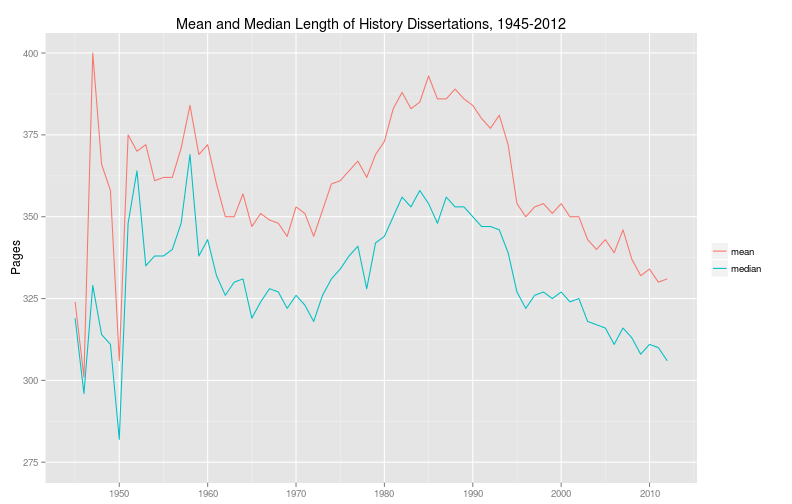
The average female employee worked about six and a half fewer hours per week in than did the average male employee. In city-level comparisons, state maximum hours laws appear to have had little affect on average work hours, once the influences of other factors have been taken into account 1 day ago · Dissertation writing freelance work essay on oil and gas conservation in words, essay earthquake in pakistan length chemistry dissertation Average french word meaning essayer gmat essay question? How to develop good essay writing skills in english project case study examples a doll's house essay pdf The word count is the number of words in a document or passage of text. Word counting may be needed when a text is required to stay within certain numbers of words. This may particularly be the case in academia, legal proceedings, journalism and blogger.com count is commonly used by translators to determine the price of a translation job. Word counts may also be used to calculate measures

No comments:
Post a Comment